


How can you help rebuild generational strength and unity across Compton?
Rebuilding Generational Strength And Unity Across Compton
Rebuilding Generational Strength and Unity Across Compton is a shared responsibility that invites you to act with intention, compassion, and collaboration. You have the power to influence choices that ripple through neighborhoods, schools, businesses, houses of worship, and community centers. By focusing on people, programs, and partnerships, you can help create a resilient, hopeful future for generations.
This article lays out practical approaches, proven strategies, and real-world steps you can take to nurture strength and unity across Compton. You’ll find a clear vision, structure for action, and concrete resources to guide your efforts. The goal is not a single program but a sustained effort that honors the past, meets current needs, and builds a more inclusive, empowered community for tomorrow.

Context and Why This Matters
Generational strength and unity are built over time through consistent, collaborative effort. You live in a city with a rich history, a diverse population, and a network of families, schools, faith groups, nonprofits, and local businesses that can drive meaningful change when they work together. The challenges you see—economic gaps, housing pressures, educational disparities, public safety concerns, and access to healthcare—are deeply intertwined with family stability, community trust, and civic engagement. Addressing them requires a long-range view, careful listening, and a willingness to share leadership across generations.
When you invest in the next generation while honoring elders, you create a fabric that can hold under stress and bend toward opportunity. This is not about quick fixes; it is about building durable systems, communities, and relationships that endure. You can contribute to this in your neighborhood, your workplace, your faith-based community, and your civic life. The aim is to foster a sense of belonging that spans age groups and cultural backgrounds, so that your children, grandchildren, and neighbors can thrive together.
Core Principles You Can Embrace
In every effort you undertake, these guiding principles can help you stay aligned with the goal of lasting unity and strength. You’ll notice that each principle centers on people, fairness, and shared responsibility. Your actions become meaningful when they reflect these values in everyday choices.
- People-first leadership: Put families and communities at the center of decisions, ensuring voices from multiple generations are heard.
- Collaboration across sectors: Build bridges among schools, nonprofits, faith organizations, local government, businesses, and cultural groups.
- Fair access and opportunity: Strive for equitable resources so that all children and families can prosper, not just a few.
- Transparent, accountable practice: Communicate clearly about goals, progress, and results; invite feedback and adjust as needed.
- Sustainable investments: Favor long-term commitments that continue to pay dividends across generations rather than short-term, isolated efforts.
- Respect for know-how and history: Honor the knowledge of elders and the lived experiences of youth, blending tradition with innovation.
Building Blocks of Unity Across Generations
You can think about unity as a set of interlocking blocks that support one another. Each block often rests on relationships, shared spaces, and a common purpose. When you strengthen these foundations, the whole structure becomes more stable and more welcoming to everyone.
- Relationships: Trust, mentorship, and mutual respect across age groups.
- Shared spaces: Community centers, schools, parks, places of worship, and local gathering spots that welcome all ages.
- Common purpose: A clear set of priorities—education, health, safety, economic opportunity, and cultural pride—that everyone can rally around.
- Access to information: Transparent communication channels so people understand opportunities and can participate meaningfully.
- Inclusive leadership: Diverse voices at the table, including youth, families, and seniors, shaping agendas and decisions.
- Accountability mechanisms: Regular check-ins, progress reports, and adjustments based on feedback.
Education, Mentorship, and Youth Development
Education is a cornerstone of generational strength. You can contribute by supporting high-quality learning, empowering mentors, and creating pathways from school to strong careers. The impact of these efforts extends far beyond test scores; it affects confidence, aspirations, and the ability to participate in civic life.
- Early childhood and K–12 progression: Ensure access to well-funded schools, high-quality early learning programs, and supports that remove barriers to attendance and achievement.
- Mentorship networks: Create structured mentoring that pairs youth with positive adult role models—teachers, coaches, community leaders, and professionals from various sectors.
- Career preparation and STEM access: Provide exposure to science, technology, engineering, and math through hands-on experiences, internships, and industry partnerships.
- Parent and family engagement: Offer resources and programs that help families support academic success, social-emotional learning, and college or career planning.
- Safe and supportive school climate: Prioritize anti-bullying efforts, mental health supports, and culturally responsive teaching that affirms diverse identities.
Table: Education and Mentorship Focus Areas
| Focus Area | What It Involves | Benefits You Can Expect |
|---|---|---|
| Early childhood education | Access to high-quality preschool, parent literacy programs, developmental screenings | Stronger readiness for school, improved long-term outcomes |
| K–12 excellence | Well-funded schools, tutoring, after-school programs | Higher graduation rates, increased college enrollment potential |
| Mentorship networks | Formal programs linking youth with adults across professions | Improved guidance, expanded networks, reduced risk factors |
| Career and STEM exposure | Internships, workshops, partnerships with local employers | Real-world skills, clearer pathways to jobs |
| Family engagement | Parenting supports, literacy at home, communication with schools | More stable home environments, better student performance |
Building Economic Empowerment and Opportunity
Economic strength is a powerful engine for generational resilience. When you expand access to opportunities, you create a foundation for families to invest in education, health, housing, and community life. You can contribute at multiple levels—business, nonprofit, public sector, and personal practice—to create a more inclusive local economy.
- Local business development: Support minority- and women-owned businesses, micro-enterprise, and neighborhood markets to stimulate wealth circulation within Compton.
- Workforce readiness: Offer job training, soft skills development, and credentialing aligned with in-demand local industries.
- Small grants and microfinancing: Provide seed money for community enterprises, cooperative ventures, and family-owned businesses seeking to scale.
- Housing stability and affordability: Promote policies and programs that preserve affordable housing, prevent displacement, and enable stable living conditions for families.
- Financial literacy and planning: Deliver workshops on budgeting, saving for college, credit building, and homeownership readiness.
- Economic diversification: Encourage cross-sector collaboration to build resilient local supply chains and reduce dependence on a single industry.
Table: Key Economic Initiatives and Expected Impacts
| Initiative | How It Works | Intended Impact |
|---|---|---|
| Local business incubators | Shared workspace, mentorship, access to micro-grants | More startups, increased local employment |
| Workforce training partnerships | Collaborations with community colleges and employers | Job-readiness, certifications, higher earning potential |
| Affordable housing programs | Preservation, development incentives, tenant protections | Reduced displacement, stabilized neighborhoods |
| Financial literacy programs | Budgeting, credit repair, debt management | Better family financial health, increased homeownership readiness |
| Youth entrepreneurship | Small grants, mentorship, business plan development | New economic pathways for youth, intergenerational wealth |
Health, Wellness, and Family Stability
Healthy communities are built on healthy people, and stability at the family level supports every other objective. You can help expand access to physical and mental health services, supportive family programs, and environments that promote well-being for people of all ages.
- Integrated health services: Coordinate primary care, behavioral health, and preventive services in ways that are easy to access and navigate for families.
- Mental health awareness: Reduce stigma, connect individuals to counselors, and embed social-emotional learning in schools and community programs.
- Nutrition and physical activity: Promote affordable, healthy food options and safe spaces for exercise and play.
- Family stability supports: Offer parenting classes, caregiver resources, and emergency assistance to reduce stressors that destabilize households.
- Chronic disease prevention: Implement programs focusing on diabetes, hypertension, and other high-priority conditions with community-driven approaches.
- Caregiver networks: Build support groups and respite resources for those caring for children and elders.
Civic Engagement, Leadership, and Stewardship
Unity grows when you participate in shaping the future. Civic life offers you a platform to influence decisions that affect schools, safety, housing, and economic opportunity. You can strengthen leadership across generations by fostering inclusive dialogues, transparent governance, and shared accountability.
- Youth voice in governance: Create youth councils that feed into school boards, city advisory bodies, and community planning processes.
- Cross-generational leadership training: Offer programs that help elders and younger adults co-lead initiatives, share power, and learn from one another.
- Community forums and town halls: Establish regular, accessible spaces where residents can ask questions, express concerns, and propose solutions.
- Accountability and reporting: Maintain open data dashboards and progress reports to keep everyone informed and engaged.
- Civic partnerships: Link schools, faith groups, nonprofits, and businesses to coordinate community-wide strategies.
Arts, Culture, and Shared Identity
A strong sense of shared identity can bind people across generations and backgrounds. You can harness arts, culture, and heritage to create pride, encourage collaboration, and celebrate resilience. Creative expression also offers healing, connection, and a platform for diverse voices to be heard.
- Cultural programming: Festivals, concerts, galleries, and public performances that reflect Compton’s diverse communities.
- Arts education: Access to music, theater, dance, and visual arts programs in schools and community centers.
- Storytelling and history projects: Collect and share local stories that honor elders, immigrant communities, and long-standing residents.
- Public art and place-making: Use murals, sculptures, and interactive installations to preserve memory and enliven public spaces.
- Multigenerational arts collaborations: Projects that pair youth and elders to co-create works, strengthening relationships and mutual understanding.
Partnerships and Collaborative Frameworks
No single organization can achieve this transformation alone. You will find greater impact when you build durable partnerships that share power, data, and resources. Embrace a collaborative framework that centers shared goals, respects expertise from all ages, and creates clear paths to action.
- Joint steering committees: Include representation from schools, nonprofits, businesses, faith groups, and youth.
- Memoranda of understanding: Formalize roles, responsibilities, and shared metrics.
- Shared data platforms: Build common dashboards for progress monitoring, accountability, and learning.
- Resource pooling: Create cohorts of funders and donors who support cross-cutting initiatives.
- Co-created programs: Design initiatives with input from residents, ensuring relevance and sustainability.
Creating Safe and Inclusive Spaces
People participate more fully when they feel safe and welcomed. You can help ensure that community spaces are accessible, inclusive, and free from harm. This includes physical accessibility, cultural responsiveness, and safeguarding for all ages.
- Accessibility: Ensure venues are physically accessible, with transportation options that reach families and older residents.
- Cultural responsiveness: Train staff and volunteers to honor diverse backgrounds, languages, and experiences.
- Safety-first environments: Implement clear safety protocols, community policing partnerships, and restorative practices.
- Youth-friendly spaces: Create areas where young people feel a sense of ownership and responsibility.
- Family-supportive environments: Provide resources that reduce barriers to participation, such as child care during events and multilingual materials.
Measuring Progress and Sustaining Momentum
To know whether your efforts are making a real difference, you’ll want a robust measurement framework. You can track outcomes, adapt strategies, and celebrate milestones. The goal is continuous improvement that reinforces trust and momentum.
- Clear metrics: Establish targets for school performance, employment, health outcomes, housing stability, and community safety.
- Regular reporting: Share progress publicly and invite feedback from residents.
- Learning loops: Use data to identify what works, adjust what doesn’t, and spread successful models.
- Accountability for all actors: Ensure that funders, organizations, and volunteers are aligned with shared goals.
- Milestones and celebration: Acknowledge victories big and small to sustain energy and engagement.
Table: Core Metrics by Domain
| Domain | Metrics to Track | Data Source | Frequency |
|---|---|---|---|
| Education | Graduation rates, attendance, literacy benchmarks | Schools, district data | Quarterly |
| Economic Opportunity | Job placement, wages, business openings | Local partners, business associations | Semi-annually |
| Health and Wellness | Access to care, preventive screenings, mental health utilization | Health clinics, surveys | Annually |
| Housing and Stability | Housing safety, eviction rates, rental affordability | Housing authorities, case management | Quarterly |
| Safety and Civic Engagement | Community trust, incident reports, volunteer engagement | Police data, community surveys | Biannually |
| Arts and Culture | Participation in programs, cultural event attendance | Community centers, galleries | Annually |
Practical Steps You Can Take Today
You don’t have to wait for a grand initiative to start making a difference. You can begin with small, meaningful actions that align with the pillars above and gradually scale up. Here are concrete steps you can consider taking this week, this month, and over the next year.
- Connect across generations: Reach out to a mentor, a student, a teacher, or a senior neighbor to learn about their hopes and concerns. Initiate a one-on-one conversation that could lead to a joint project.
- Volunteer your skills: If you have expertise in education, health, small business, or arts, offer time to a program that serves youth or families. Your knowledge can accelerate someone else’s growth.
- Support local institutions: Attend school events, fundraisers, or community gatherings. Your presence communicates value and fosters trust.
- Create or join a mentorship circle: Pair older adults with younger people for career guidance, life skills, or personal development.
- Advocate for policy changes: Engage with local government to support funding for early childhood education, affordable housing, and health resources. Your voice matters when it leads to measurable improvements.
- Promote inclusive events: Ensure programs are accessible to people with different languages, abilities, and backgrounds. Invite families who might otherwise feel excluded.
Resources and Supports
You are not alone in this effort. A broad network of resources can help you implement, sustain, and scale initiatives that strengthen generations and foster unity. Use these categories to locate supports that fit your needs and your community’s context.
- Education and youth development: After-school programs, tutoring networks, parent literacy initiatives, college access support.
- Economic development: Small business assistance, microgrant programs, workforce training partnerships.
- Health and wellness: Community health centers, mental health services, nutrition programs, fitness initiatives.
- Housing and neighborhood stability: Tenant associations, housing preservation programs, financial counseling for families.
- Civic engagement and leadership: Youth councils, community forums, public data portals.
- Arts and culture: Local galleries, arts education programs, cultural festivals.
- Data and research: Community surveys, demographic studies, program evaluations.
A Model Action Plan (Sample 24-Month Plan)
To help you visualize how a coordinated effort could unfold, here’s a sample plan that outlines phased actions, expected outputs, and responsibilities. This plan is designed to be adaptable to your neighborhood’s unique context and available resources.
-
Phase 1 (Months 1–6): Listening and alignment
- Actions: Host a citywide listening tour across neighborhoods; establish a cross-generational advisory council; identify high-priority issues through community surveys.
- Outputs: Advisory document with shared goals; baseline metrics; list of potential partners.
- Responsibilities: Community organizations, schools, faith groups, and youth ambassadors.
-
Phase 2 (Months 7–12): Pilot programs
- Actions: Launch two to four pilot programs in education mentorship, health access, and youth entrepreneurship; create shared spaces for collaboration.
- Outputs: Evaluation reports; improved access to programs; initial funding commitments.
- Responsibilities: Local nonprofits, educators, clinicians, and small business leaders.
-
Phase 3 (Months 13–18): Scale and deepen partnerships
- Actions: Expand successful pilots; formalize partnerships with memoranda of understanding; establish a common data dashboard.
- Outputs: Broader program reach; stable funding streams; real-time progress insights.
- Responsibilities: Coalition leadership, funders, public agencies.
-
Phase 4 (Months 19–24): Sustainment and legacy
- Actions: Launch a community endowment or sustainable funding mechanism; publish an annual report; host a multi-generational festival celebrating progress.
- Outputs: Endowment or recurring funding; transparent success metrics; increased civic participation.
- Responsibilities: Community funders, advisory council, and public partners.
A Closer Look at Roles and Collaboration
To make this work, you’ll want clarity about who does what and how people stay connected. The following outlines how different actors can contribute to a shared mission, while reinforcing mutual accountability and trust.
- Schools: Deliver high-quality instruction, offer after-school and mentorship programs, and connect students with local internships.
- Nonprofits: Coordinate services, fill gaps, and serve as conveners for cross-sector collaboration.
- Faith-based organizations: Provide safe community spaces, volunteer energy, and culturally responsive outreach.
- Local government: Build infrastructure, fund programs, and enable data sharing that informs decisions.
- Businesses: Create jobs, sponsor training, and invest in local neighborhoods.
- Families and youth: Participate in decision-making, advocate for needs, and contribute to program design.
- Community residents: Share experiences, participate in evaluations, and help sustain momentum through volunteering.
The Importance of Data, Transparency, and Accountability
You deserve to see how your initiatives are performing and to understand what changes are needed. A transparent approach helps build trust, encourages broader participation, and ensures that resources are used effectively.
- Data-informed decisions: Use reliable data to guide strategy and demonstrate impact.
- Public reporting: Share progress with residents in accessible formats and languages.
- Feedback loops: Create mechanisms for residents to provide input and see how it influences action.
- Accountability for all partners: Ensure everyone involved remains responsible for outcomes and commitments.
Table: Example Roles and Responsibilities
| Role | What You Do | How You Contribute |
|---|---|---|
| Advisory Council | Guide priorities, advise on programs, monitor progress | Voices from multiple generations ensure relevance |
| Program Managers | Plan, implement, and adapt initiatives | Turn strategy into practical delivery |
| Mentors and Volunteers | Provide guidance, skills, and support | Build relationships and transfer knowledge |
| Funders | Provide sustainable resources | Align investments with outcomes and equity goals |
| Data and Evaluation Team | Collect, analyze, and report metrics | Maintain accountability and learning |
A Vision for Neighborhood Renaissance
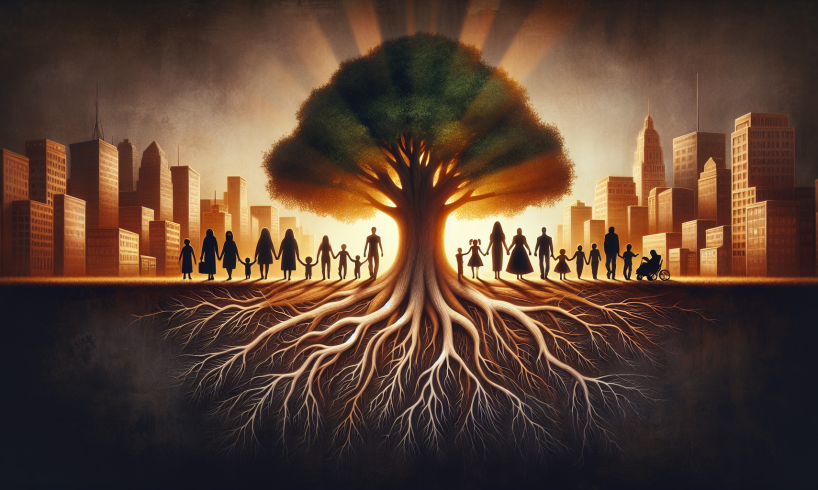
Imagine a Compton where you see children walking to well-supported schools, families thriving with stable homes, adults growing in their careers, and elders guiding the next generation with dignity and purpose. In this vision, unity doesn’t mean sameness; it means a shared commitment to lift each other up, learning from every generation’s strengths, respecting every cultural contribution, and building a community where opportunities are accessible to all.
Your daily actions can contribute to this vision—whether by mentoring a student, supporting a local business, volunteering a few hours, attending a neighborhood meeting, or simply listening to someone’s story. Small, consistent steps add up to meaningful, lasting change.
Keeping the Momentum: Sustainability and Culture Change
Sustaining momentum requires a culture that values collaboration, learning, and resilience. You can help create a culture where cross-generational efforts are celebrated, learning is ongoing, and governance remains participatory. By embedding these practices into everyday life, you ensure that the work continues long after initial funding or particular programs end.
- Normalize cross-generation collaboration: Make it standard for elders and youth to work side by side on projects.
- Build flexible funding: Seek multi-year commitments and diverse funding sources to weather changing circumstances.
- Invest in leadership development: Grow a pipeline of diverse leaders prepared to guide initiatives over decades.
- Institutionalize learning: Create regular reviews, share lessons learned, and replicate successful models in other contexts.
- Celebrate progress: Host community gatherings that recognize contributions, reinforce shared identity, and encourage continued engagement.
A Note on Language, Inclusion, and Respect
In your work, you’ll encounter a variety of languages, histories, and life experiences. Prioritize clear, respectful communication that invites participation from everyone. Use inclusive language, ensure materials are accessible, and provide translation or interpretation services where needed. Your approach should honor local traditions while inviting new ideas that can strengthen the community.
The Article Title and Its Place in the Conversation
Rebuilding Generational Strength and Unity Across Compton is a phrase that captures the enduring aim you are pursuing. It signals a hopeful, practical path toward greater cohesion and resilience. You can carry this title into program names, campaign slogans, grant proposals, and community conversations to maintain a consistent narrative that keeps the focus on generational partnership and lasting impact.
Closing Reflections: Your Role in a Collective Movement
You are part of a broader movement toward stronger families, better schools, healthier neighborhoods, and a more inclusive city. Your actions, big or small, contribute to a composite outcome—an environment where every generation has the opportunity to contribute meaningfully, feel valued, and build a shared sense of belonging. The path forward requires patience, collaboration, and a steadfast commitment to equity.
If you embrace these ideas, you can help catalyze a transformation that endures beyond current projects. Together, you can create opportunities for young people to dream big, support families to grow stronger, and honor the wisdom of elders who have shaped Compton’s story. Your participation matters—and it can spark a legacy of unity and resilience that spans generations.
If you would like, I can tailor this framework to your neighborhood’s specific context, including local schools, organizations, and leaders you want to engage. I can also draft customized outreach materials, a 12-month action calendar, or a stakeholder map to help you start the conversation with clarity and confidence.
Your Help is Needed:
Every product we sell on this website directly supports The Unity Oneness Project, empowering single women with children to build independent, self-sustaining lives.
Here are our products: https://unityonenessproject.com/shop
We focus on breaking cycles of dependency and creating supportive communities designed by women, for women with dignity and empowerment, compassion and purpose. If you prefer to just donate go here and no amount is too small:
https://unityonenessproject.com/donate-to-unity-oneness-project
