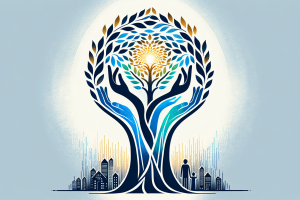




What would it take for you to help your community align across generations toward shared growth and lasting well-being?
Arcadia’s Vision For Generational Unity And Shared Success
Arcadia’s vision centers on bringing generations together to build a foundation where unity and prosperity are shared, practical, and durable. In this framework, you are a vital participant, not a spectator. You are invited to contribute your experiences, your skills, and your hopes, while drawing strength from the knowledge of others who have navigated different life stages. The result is a living system that grows richer as it ages—just like the city, town, or neighborhood you call home.
This article outlines a clear approach to turning generational unity into tangible outcomes: better education pathways, more resilient local economies, healthier communities, and governance that reflects the needs of all ages. You will find lines of action, concrete mechanisms, and examples you can adapt to your own context. The aim is not to create a theoretical ideal but to map a practical path you can walk with your neighbors, families, schools, businesses, and public institutions.
Why Generational Unity Is Worth Investing In
Generational unity is not a soft virtue; it is a strategic asset. When younger generations can access the wisdom, networks, and resources of older generations, and when elders stay engaged with the energy and innovation of youth, the whole community becomes more adaptable and resilient. You stand to gain in multiple dimensions: education outcomes improve when mentors are available, local businesses thrive when experienced guidance pairs with fresh ideas, and social cohesion strengthens when people see themselves as part of a shared journey rather than a sequence of isolated life stages.
In Arcadia’s vision, unity is not about sameness; it is about complementary strengths. You have a crucial role to play in creating spaces where those strengths are recognized, respected, and connected. The following sections outline how you can contribute, what you can expect in return, and how the entire ecosystem can sustain itself over generations.
Core Principles That Guide the Vision
To keep your efforts focused, Arcadia centers on a set of enduring principles. They function like a compass, helping you navigate decisions, partnerships, and day-to-day concerns.
- Intergenerational reciprocity: You give and receive value across age groups, ensuring that knowledge, resources, and opportunities circulate throughout the community.
- Shared ownership and stewardship: You participate in governance and economic models that distribute responsibility and reward, so prosperity is not owned by a few but managed collectively.
- Lifelong learning as a common infrastructure: Education and skill-building are ongoing, accessible, and tailored to your evolving needs and those of others in your life.
- Well-being as a public good: You prioritize mental, physical, and social health, recognizing that healthy communities enable sustainable success.
- Inclusion and accessibility: You design systems that welcome people across backgrounds and abilities, ensuring no one is left behind.
- Transparent governance and accountable action: You operate with openness, clear metrics, and regular feedback to build trust and effectiveness.
- Local resilience through diversified economies: You build a mix of initiatives that can weather shocks and reduce dependence on single industries or external supports.
- Generational dignity and respect: You honor the experiences and contributions of people at every life stage, creating spaces where every voice matters.
If you carry these principles into your planning and conversations, you set up a landscape where collaboration becomes natural rather than forced, and where the benefits of unity are tangible in daily life.
How to apply these principles in your neighborhood
- Start conversations across age groups with shared questions: What are your hopes for the next five years? What barriers do you see to a thriving community?
- Co-create a simple charter that reflects these principles, inviting everyone to sign and uphold it.
- Build a calendar of intergenerational activities that mix formal learning, informal mentorship, and community service.
The Intergenerational Collaboration Framework
You cannot achieve generational unity without structured mechanisms that facilitate collaboration. This framework is designed to be flexible, scalable, and easy to implement in different contexts. It provides practical places where your actions can happen: schools, community centers, workplaces, and virtual spaces.
- Mentorship circles: Pairing experienced adults with younger learners or early-career professionals for ongoing guidance, with regular check-ins and goal setting.
- Knowledge transfer projects: Documenting and sharing tacit wisdom from elders in ways that are accessible to youth and new residents, using storytelling, transcripts, and demonstrations.
- Youth councils and elder councils: Separate decision-making bodies that come together to shape programs, then reconvene to translate plans into action.
- Collaborative problem-solving labs: Short cycles where mixed-age teams work on real community challenges, such as improving transit access or reducing energy use in a block.
- Community assets mapping: Identifying local resources, including people, spaces, and capabilities, and mapping them to opportunities for collaboration.
Here is a quick reference to how these mechanisms translate into concrete actions.
| Mechanism | Purpose | How You Implement | Example |
|---|---|---|---|
| Mentorship circles | Build guidance networks | Create rotating groups, with a facilitator and clear development goals | A high schooler pairs with a local business owner to explore entrepreneurship paths |
| Knowledge transfer projects | Preserve and share wisdom | Collect stories and lessons; translate into practical guides | Elders document traditional crafts, which are taught in weekend workshops |
| Youth councils and elder councils | Inclusive governance | Establish parallel councils that meet regularly and feed into a joint council | Youth propose digital literacy programs; elders contribute with experience in community organization |
| Collaborative problem-solving labs | Address real issues | Run short cycles with defined tasks and measurable outcomes | Improve after-school programming by co-designing with students and instructors |
| Community assets mapping | Leverage local capacity | Inventory people, spaces, and capabilities; create access pathways | Map unused spaces for pop-up learning centers and mentorship hubs |
If you adopt this framework, you create predictable, measurable opportunities for people of different ages to connect, learn, and contribute. You will notice that each mechanism is designed to be inclusive, practical, and scalable, so you can adapt it to your city, town, or neighborhood’s size and culture.
Building Shared Economic Prosperity
A central piece of Arcadia’s vision is an economy that rewards participation across generations. You can pursue shared prosperity by combining cooperative models, local investment, and inclusive hiring practices that reflect the community’s diversity of life experiences.
Key components include:
- Cooperative enterprises: Businesses owned and governed by members who contribute capital, labor, or expertise. These co-ops can span sectors such as food, housing, energy, and services.
- Community investment strategies: Local funds, micro-loans, and grant programs that prioritize projects with intergenerational benefits and broad access to opportunity.
- Revenue-sharing models: Programs in which profits are reinvested in community initiatives, with a portion allocated to supporting education, health, and neighborhood improvements.
- Workforce pipelines across generations: Apprenticeships and internships designed to bring together students, early-career workers, and seasoned professionals to build durable career paths.
- Asset-rich community projects: Public assets (like vacant land or underused facilities) are repurposed for community use, creating value that circulates locally.
A practical approach to implementing these ideas involves three layers: governance, capital, and day-to-day operations. You can think of it as a triad that reinforces each other.
- Governance: You participate in decision-making about which ventures receive funding, how profits are shared, and how success is measured.
- Capital: You contribute or steward resources—money, land, equipment, or talent—that enable ventures to start and grow.
- Day-to-day operations: You help run enterprises, participate in cooperative governance, and contribute to continuous improvement.
Table: Shared Economic Pathways
| Pathway | Why it matters | How you participate | Potential outcomes |
|---|---|---|---|
| Worker-owned cooperatives | Aligns ownership with systemic participation | Join as a worker-owner; help set strategy | Fair wages, broad-based control, local resilience |
| Community investment funds | Directs capital to local impact | Contribute capital or voting rights; participate in review committees | Local projects funded; reduced external dependency |
| Social enterprises with intergenerational goals | Combines social mission with financial sustainability | Develop enterprises that serve both youth and elders | Accessible services, cross-generational demand |
| Asset reutilization programs | Maximizes underused assets for public good | Propose vacant spaces for shared use; volunteer to manage assets | More community spaces; lower costs for programs |
When you weave these economic strategies into the fabric of your community, you create loops of value that persist beyond individual careers or lifetimes. The aim is not to replace traditional business models but to add layers of inclusion and shared benefit that are resilient to shocks and flexible in changing times.
Education, Training, and Lifelong Learning
You know that learning cannot be confined to a narrow window of childhood or early adulthood. Arcadia’s vision treats education as a continuum that grows with you. This means creating pathways that connect schools, community programs, workplaces, and informal learning environments so that knowledge, skills, and confidence advance together across generations.
Key elements include:
- Accessible learning pathways: Courses and programs designed for various life stages, including school-age students, working adults, parents re-entering the workforce, and seniors seeking new interests.
- Mentorship-driven curricula: Curricula enhanced by mentors who bring real-world experience, ensuring that what you learn has practical applicability.
- Skill stacks and portable credentials: Programs that accumulate skills in layers, allowing you to build credentials that travel with you across jobs and industries.
- Experiential learning ecosystems: Hands-on opportunities such as internships, apprenticeships, service-learning, and co-created projects that tie learning to living in the community.
A practical way to implement lifelong learning is to create a network of micro-partnerships. You can link K-12 schools with local colleges, vocational programs, and community organizations to map learning to local opportunities. In this approach, you establish formal and informal channels for knowledge exchange, including community-based labs, after-school programs, and summer institutes.
What this looks like in practice:
- Mentored internships in local businesses or nonprofits where students work with seasoned professionals to solve real problems.
- Community-based courses taught by professionals from multiple generations, integrating practical problem-solving with foundational theory.
- Adult education programs that recognize prior learning and accelerate return-to-work paths, with career guidance and job placement support.
Table: Lifelong Learning Pathways
| Pathway | Target Learner | Typical Format | Outcome Focus |
|---|---|---|---|
| School-to-Work Bridges | High school seniors, early college | Mentored internships, project-based learning | Career clarity, job readiness |
| Community Micro-Credentials | Working adults, parents re-skilling | Short courses, stackable certificates | Rapid upskilling, mobility |
| Elder-Led Knowledge Labs | All ages, especially youth | Storytelling, demonstrations, co-created curricula | Wisdom transfer, context-rich learning |
| Family Learning Loops | Families seeking joint growth | Weekend workshops, home-learning kits | Shared learning experiences, stronger family ties |
In your role, you can help design these pathways by identifying local needs, pairing instructors with learners, and ensuring access (transportation, childcare, scheduling) so that no one is excluded. Lifelong learning becomes not a separate program but a natural rhythm of community life.
Health, Well-being, and Social Capital
Health and well-being are foundational to any lasting unity. You cannot achieve shared success if parts of the community struggle with daily stress, illness, or isolation. Arcadia’s approach treats well-being as a public good with multi-layered interventions that strengthen both health outcomes and social connections.
Core areas include:
- Accessible healthcare and preventive services: Local clinics, mobile health units, and preventive care that reach people where they live and work.
- Mental health and resilience supports: Community-based counseling, peer support networks, and stigma reduction campaigns.
- Safe, inclusive spaces for aging and youth: Public spaces, programs, and services that welcome all ages and abilities.
- Social capital building: Programs that foster trust, belonging, and mutual aid, such as neighbor-to-neighbor support groups or intergenerational volunteer networks.
- Environmental well-being: Clean air, safe housing, and green spaces that contribute to physical and mental health.
If you want to visualize how these pieces fit together, think of a layered system: health services, mental wellness supports, and social infrastructure all reinforcing one another. When people feel physically well and emotionally supported, they can participate more fully in learning, work, and civic life, creating a positive feedback loop that strengthens the entire community.
Practical steps you can take include:
- Establish neighborhood health hubs that host regular clinics, screenings, and wellness workshops.
- Create peer-support circles to address stress, grief, or chronic illness management.
- Design neighborhood improvement projects that simultaneously promote environmental health and social connection.
Table: Well-being and Social Capital Initiatives
| Initiative | Purpose | Implementation Tactics | Expected Benefits |
|---|---|---|---|
| Local health hubs | Improve access to preventive care | Mobile clinics, weekend hours, multilingual staff | Higher vaccination rates, early disease detection |
| Mental wellness circles | Normalize seeking help | Peer-led groups, trained facilitators, confidentiality | Reduced isolation, better coping skills |
| Intergenerational social clubs | Build trust across ages | Regular mixed-age activities, shared meal events | Stronger community ties, reduced ageism |
| Housing and environment | Improve living conditions | Partnerships for safe housing, green space projects | Healthier homes, cleaner neighborhoods, climate resilience |
You play a critical role in ensuring these efforts are inclusive and responsive. By participating in planning, advocating for resources, and helping deliver services, you strengthen the social fabric that supports every other dimension of Arcadia’s vision.
Governance, Civic Engagement, and Transparent Stewardship
Unity across generations flourishes when governance is clear, participatory, and accountable. You deserve to know how decisions are made, what values guide them, and how outcomes are measured. Arcadia’s governance model emphasizes participatory processes, data-informed decisions, and accountability mechanisms that are accessible and meaningful to all ages.
Key features of this governance approach include:
- Participatory budgeting: Residents of all ages contribute ideas and vote on a portion of the budget to fund projects that benefit the community.
- Open data and transparency: Public access to budgets, project plans, performance metrics, and procurement records.
- Multi-stakeholder advisory groups: Committees that include representatives from schools, businesses, non-profits, and civic groups to provide ongoing guidance.
- Accountability and feedback loops: Regular reporting, community forums, and opportunities to adjust priorities based on feedback.
- Inclusive policy design: Practices to ensure that the voices of youth, elders, people with disabilities, and marginalized groups are integrated into policy development.
In practice, this means you can engage in practical governance tasks—from attending town halls to serving on advisory boards, to helping design citizen-science-style data collection that tracks progress on health, education, and economic outcomes. When your input feeds real decisions, you experience governance as something that is yours to shape and refine.
Table: Roles in a Participatory Governance Model
| Role | Responsibility | How you participate | Benefit to the community |
|---|---|---|---|
| Citizen participant | Attend forums, provide input | Sign up for advisory groups, contribute feedback | Better policies reflect diverse needs |
| Youth and student delegates | Represent younger generations | Lead youth-focused agendas, mentor peers | Tangible opportunities for early leadership |
| Elder ambassadors | Represent elders and wisdom traditions | Share lived experiences, review policies from a long-term lens | Respectful integration of history with modern needs |
| Civil society partners | Coordinate across sectors | Facilitate cross-sector projects, ensure inclusivity | More robust, well-rounded programs |
| Local government or agency staff | Facilitate processes | Ensure transparency, track metrics, implement feedback | Efficient, trusted governance |
As you engage in these governance processes, you help ensure that Unity is not just a slogan but a practiced habit. Your participation reinforces legitimacy, strengthens trust, and accelerates delivery of results that matter to people across generations.
Implementing the Vision: Roadmaps, Milestones, and Metrics
Turning intention into momentum requires a clear roadmap with concrete milestones and measurable outcomes. You can think of the Arcadia plan as a multi-year implementation, with short-term wins to build confidence, mid-term strengthening of systems, and long-term sustainability that endures beyond leadership changes.
A practical approach involves three horizons:
- Horizon 1 (Year 1-2): Establish foundations—charter, governance bodies, initial programs, pilot collaborations, and early metrics.
- Horizon 2 (Year 3-5): Scale and optimize—expand successful programs, deepen partnerships, refine revenue models, and broaden access.
- Horizon 3 (Year 5+): Institutionalize and sustain—embed practices into local policy, ensure equitable funding, and create a self-sustaining ecosystem.
Here is a sample outline of milestones and metrics you can adapt to your context.
Table: Implementation Roadmap and KPIs
| Horizon | Focus Area | Milestones | Key Performance Indicators (KPIs) |
|---|---|---|---|
| Horizon 1 (Year 1-2) | Governance setup | Establish participatory budgeting, form intergenerational councils | % of neighborhoods with active councils, budget adoption rate |
| Education and learning | Launch mentorship programs, map learning pathways | Mentor-mentee match rate, number of learners enrolled | |
| Economic collaboration | Create first worker-owned cooperative pilot | Number of cooperatives formed, initial revenue impact | |
| Horizon 2 (Year 3-5) | Scale and integration | Expand to 5-8 neighborhoods, align with school districts | Coverage rate, cross-generational participation rate |
| Health and well-being | Implement community health hubs network | Access metrics, preventive care uptake, patient satisfaction | |
| Data and accountability | Publish annual progress reports with open data | Data accessibility score, stakeholder trust indicators | |
| Horizon 3 (Year 5+) | Policy integration | Integrate successful models into local policy | Policy adoption rate, long-term sustainability indicators |
| Economic maturity | Mature shared ownership models across sectors | Asset turnover, community dividend distribution | |
| Systemic resilience | Prepare for shocks with diversified assets | Resilience indices, disaster response readiness |
You can use this framework to guide planning sessions, align budgets, and communicate progress to residents and partners. The crucial thing is to track not just outputs (numbers of programs) but outcomes (how people feel, how opportunities change lives, and how systems adapt to new needs). Regular reflection and adjustment keep the plan relevant as your community evolves.
Case Scenarios: Illustrative Pathways to Shared Success
To help you imagine how these ideas translate into real life, consider two brief scenarios that show distinct pathways toward Arcadia’s vision. Your community will have its own version, of course, but these portraits can spark practical adaptations.
Scenario A: A Neighborhood Co-op Corridor
In your neighborhood, a cluster of small businesses collaborates to form a worker-owned cooperative network. Elders contribute expertise and mentorship, while younger residents bring digital literacy and design thinking. The cooperative buys a vacant storefront, refurbishes it with sustainable materials, and creates shared workspace, a small cafe, and a training hub. Profits are reinvested into neighbor-led programs—after-school tutoring, elder care hours, and a neighborhood garden.
- What you contribute: Time to mentor, skills to teach, and a voice in the cooperative’s decisions.
- What changes: Local jobs, stronger intergenerational ties, and a visible demonstration of shared ownership.
- Outcome measure: Economic activity in the corridor, student learning gains, and participant satisfaction with governance.
Scenario B: A School-Community Learning Alliance
A district enters into a formal alliance with community organizations to weave learning more deeply into everyday life. Teachers collaborate with elder volunteers to design project-based units that connect math with real-world problems faced by residents—such as affordable housing design or energy efficiency. Youth mentors help peers prepare for college and career, bringing current student interests into the program. The alliance receives seed funding to support access for students from all backgrounds.
- What you contribute: Coordinating roles, mentorship, and feedback to improve learning pathways.
- What changes: Expanded access to opportunities, stronger alignment between schooling and local needs, and richer intergenerational exchange.
- Outcome measure: Graduation rates, college enrollment, and satisfaction with school-community partnership.
These scenarios are not predictive templates but rather flexible anchors. You can adapt them by taking stock of your community’s existing assets, your local institutions’ readiness, and the timelines you can realistically sustain. The throughline is clear: when youth and elders learn together, contribute together, and share ownership, prosperity and belonging grow in tandem.
Partnerships and Ecosystem: Building the Right Network
Arcadia’s vision relies on a broad network of actors who bring complementary strengths. You should aim for a diverse ecosystem that includes schools, local government, businesses, nonprofits, faith-based and cultural organizations, and residents. The goal is not to assemble a laundry list of partners but to cultivate coherent clusters where collaboration is easy and effective.
Key partnership themes include:
- Education and industry alignment: Schools connect with local employers to design curricula that prepare students for in-demand roles, while employers gain access to motivated, trained workers.
- Public-private-community collaborations: Government agencies coordinate with businesses and nonprofits to deliver services efficiently and equitably.
- Cultural and social infrastructure: Museums, libraries, community centers, and cultural groups preserve heritage and provide spaces for cross-generational exchange.
- Health and well-being networks: Health providers partner with community organizations to deliver preventive care, mental health support, and wellness programs at convenient locations.
- Aging in community services: Agencies and volunteers coordinate to support elders, ensuring they remain engaged with dignity and purpose.
Your role in these partnerships is to identify opportunities, participate in planning, and advocate for accessible, inclusive programs. When you contribute as a partner, you help turn systemic collaboration into everyday experiences that feel natural and beneficial to everyone involved.
Anticipated Challenges and Risk Management
No large social transformation is without obstacles. You should anticipate challenges and prepare proactive responses so your efforts stay resilient and credible.
Common challenges include:
- Resource constraints: Limited funding, personnel, or space can slow progress. Mitigation includes prioritized funding, diversified funding streams, and shared spaces.
- Resistance to change: Some residents may prefer the status quo. Mitigation includes transparent communication, small wins, and inclusive design processes.
- Coordination complexity: Multiple sectors and generations can create friction. Mitigation includes clear roles, governance structures, and facilitated collaboration.
- Risk of tokenism: Superficial involvement of certain groups can undermine trust. Mitigation includes genuine power sharing, accountability, and measurable impact.
- Equity gaps: Some populations may face barriers to access. Mitigation includes targeted outreach, flexible scheduling, and affordable participation.
- Sustainability concerns: Initiatives may rely on short-term grants. Mitigation includes embedding programs into local budgets and building revenue-sharing models.
Proactive strategies you can deploy:
- Establish a shared decision-making framework with explicit criteria for funding and program selection.
- Use simple, consistent metrics to track progress and publish them openly so stakeholders see accountability in action.
- Create fallback plans for funding and operations to minimize disruption if external conditions shift.
- Build a culture of learning where failures are analyzed, and improvements are implemented quickly.
By facing these challenges head-on with a practical, inclusive approach, you create a more resilient path toward shared success that can endure political cycles and economic fluctuations.
Communication Strategy: Telling the Story of Unity
A compelling narrative helps you attract participants, align actions, and sustain momentum. The communication strategy you implement should be inclusive, transparent, and driven by outcomes. It should also be accessible across languages, literacy levels, and digital access.
Elements of the strategy include:
- Clarity of purpose: A concise, memorable articulation of the vision and its benefits for every generation.
- Broad accessibility: Multilingual materials, plain-language summaries, and alternative formats (audio, large print) to reach diverse audiences.
- Open data and storytelling: Public dashboards show progress with stories that illustrate impact on real people’s lives.
- Regular touchpoints: Community forums, town halls, newsletters, and social channels to keep people informed and involved.
- Two-way channels: Mechanisms for feedback, questions, and co-creation of future plans.
You can participate by helping to craft messaging that reflects people’s lived experiences, by sharing stories of intergenerational collaboration, and by helping translate policy language into everyday terms. When communication centers the experiences of residents, trust grows, and participation expands.
Conclusion: Your Role in Arcadia’s Shared Future
You stand at the intersection where tradition and innovation meet—where the wisdom of elders and the energy of youth converge to imagine and realize a different kind of prosperity. Arcadia’s Vision For Generational Unity And Shared Success is not a distant ideal; it is a practical invitation to co-create a living system that adapts, endures, and thrives across generations.
You can begin now by taking concrete steps:
- Start or join an intergenerational mentorship circle and commit to a recurring schedule for conversations, skill-sharing, or joint projects.
- Convene a small group to map local assets and identify at least two opportunities to turn them into shared resources or ventures.
- Attend or help organize a public forum to discuss participatory budgeting ideas, aligning your proposals with the community’s values and needs.
- Volunteer with health, education, or housing initiatives that serve across generations, focusing on removing barriers to participation.
In doing these things, you participate in a ripple effect that strengthens family stability, local economies, schools, and civic life. You contribute to a shared future where generational unity becomes a lived experience rather than a headline. Arcadia’s journey is your journey—an ongoing process of learning, contributing, and growing together.
If you want this vision to take root in your community, begin with a single step, but keep your eyes on the broader horizon. The true measure of shared success lies in how often you see neighbors helping neighbors across age lines, how readily opportunities flow to people at every stage of life, and how confident you feel about the future because you know you played a part in shaping it. Your commitment today becomes the foundation others will build on tomorrow.
Your Help is Needed:
Every product we sell on this website directly supports The Unity Oneness Project, empowering single women with children to build independent, self-sustaining lives.
Here are our products: https://unityonenessproject.com/shop
We focus on breaking cycles of dependency and creating supportive communities designed by women, for women with dignity and empowerment, compassion and purpose. If you prefer to just donate go here and no amount is too small:
https://unityonenessproject.com/donate-to-unity-oneness-project