



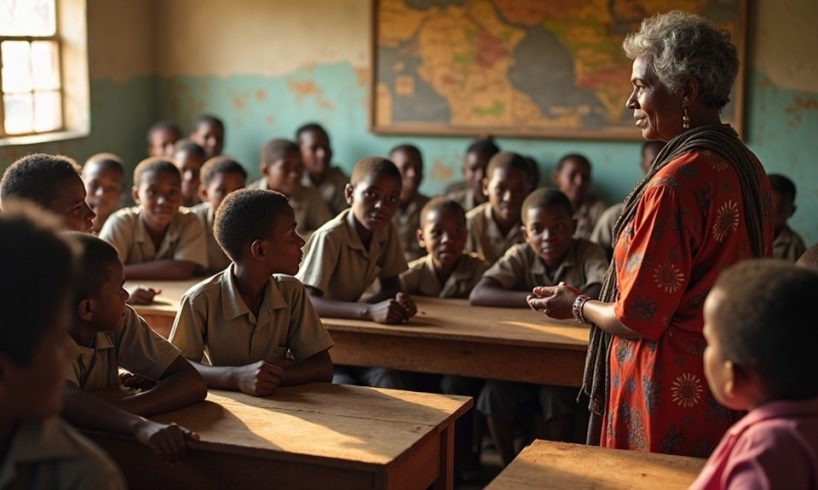
When you treat dignity as a core goal of education, not a bonus, you change how students see themselves and each other. You start asking different questions: Who feels unseen here? Whose voice is missing? How do policies either protect or erode a child’s sense of worth? Once you see that every rule, routine, and lesson either builds or breaks dignity, you can’t run a classroom—or a community—the same way again…
Main Points
- Centering dignity in classrooms—through safety, voice, fairness, and high expectations—builds students’ confidence, agency, and capacity to contribute to strong communities.
- Dignity-based norms for listening, disagreement, and conflict repair in schools model the civic behaviors needed for inclusive, fair community life.
- Treating families and community partners as co-educators weaves learning into existing support networks, strengthening trust and shared responsibility for youth success.
- Collaborative goal-setting and regular two-way communication between schools and communities ensure education reflects local values and promotes mutual respect.
- Measuring student voice, belonging, and fairness—and using this feedback to improve—helps sustain dignity-driven education as a stabilizing force in communities.
Why Dignity Belongs at the Heart of Education
Dignity is the organizing principle that turns schooling into true education. When you treat every learner as inherently worthy—not conditionally valuable—you change what counts as success. You don’t just transmit content; you form capable, self-respecting people.
Start by defining dignity operationally: every student deserves safety, voice, fairness, and high expectations. Then align your choices. Ask of each policy, lesson, and interaction: Does this protect or undermine dignity?
You design tasks that require real thinking, not busywork. You give feedback that targets actions, not a student’s worth. You enforce boundaries without humiliation. You invite questions, not compliance alone.
When you center dignity, students engage for reasons deeper than grades: they’re building competence, character, and agency that endure beyond school.
How Dignity-Centered Classrooms Strengthen Communities
When you build a classroom around dignity, you don’t just help individual students—you quietly rewire the culture of the wider community.
You set shared expectations: people listen before judging, repair harm after conflict, and treat differences as assets. Over time, this becomes the social “default” your students carry into families, workplaces, and local institutions.
You strengthen communities when your classroom reliably:
- Models fair processes so students expect fairness in civic life
- Trains students to voice disagreement without contempt
- Normalizes inclusion, making exclusion socially costly
- Links personal responsibility with mutual respect
- Treats mistakes as learning data, not identity labels
Practical Ways Schools Can Honor Student Dignity
Although honoring dignity can sound abstract, you make it real through specific, repeatable practices embedded in daily school life.
Start by defining dignity expectations with students, not for them. Co-create norms for listening, disagreement, and repair after harm. Make respect observable: eye level conversations, no public shaming, private redirection, and timely follow-up.
Design academic structures that signal worth. Use frequent formative checks so students see progress, not just final judgment. Offer choice in tasks and products, then explain how each option still meets standards.
Build predictable routines for voice: daily openings, exit reflections, rotating classroom roles.
Finally, track dignity like any other priority. Set measurable goals, gather student feedback, study patterns, and adjust practices until honor becomes habit.
Partnering With Families and Communities Around Education
If you want dignity to shape more than just what happens inside classroom walls, you have to treat families and community partners as co-educators, not as an audience.
You start by mapping who’s already in students’ lives—caregivers, elders, local organizations—and then clarify how each can support learning.
Use simple, predictable structures so people know how to engage:
- Share two-way communication routines (texts, calls, short surveys).
- Co-design learning goals with families at key points each year.
- Invite community partners to connect curriculum with real-world problems.
- Offer flexible roles: mentoring, storytelling, translation, logistics.
- Close the loop by showing how their contributions shaped student experiences.
When you do this consistently, you build a learning ecosystem where every stakeholder’s dignity and expertise drive daily decisions.
Measuring Impact and Sustaining Dignity-Driven Education
Strong partnerships with families and communities only reach their full power if you can see, track, and strengthen their impact over time. Start by defining dignity-centered outcomes: student voice, belonging, cultural pride, academic growth, and family leadership.
Translate each into 2–3 observable indicators you can measure regularly.
Use mixed methods. Pair attendance, graduation, and achievement data with student, family, and educator feedback. Ask, “Where do people feel unseen? Where’s dignity protected or harmed?”
Review results with families and students, not just staff.
Build simple routines: quarterly reflection meetings, annual community surveys, and public sharing of what you’ve changed based on feedback.
Protect time, train champions, and document practices so they survive leadership changes. That’s how you sustain dignity-driven education, not just launch it.
Frequently Asked Questions
How Can Digital and AI Tools Support Dignity-Centered Learning Without Surveillance Harms?
You design tools that process locally, anonymize data, minimize collection, and give learners control. You require transparent models, opt-in analytics, human oversight, clear deletion timelines, and collective governance, so AI augments autonomy, not extracts behavior for hidden profiling.
What Role Does Student Activism Play in Shaping Dignity-Focused School Policies?
Student activism anchors dignity-focused policies because you define problems, demand transparency, and test solutions. You organize peers, gather stories, propose language, monitor implementation, and refuse tokenism, ensuring rules protect autonomy, voice, and fairness, not just institutional convenience.
How Do We Integrate Dignity Education Into Vocational and Technical Training Programs?
You integrate dignity education by first mapping key rights-based competencies, then embedding them into safety modules, teamwork drills, and assessments. You don’t bolt it on; you co-create case studies, reflective journals, and role-plays with apprentices and instructors.
What Strategies Protect Teacher Dignity Amid High-Stakes Testing and Accountability Pressures?
You protect teacher dignity by setting clear workload boundaries, documenting pressures, uniting with colleagues, reframing tests as data, mastering required metrics, advocating evidence-based policy changes, celebrating non-test achievements, and aligning daily practice with your core teaching values.
How Can Schools Honor Dignity for Students Experiencing Homelessness or Unstable Housing?
You honor their dignity by treating housing instability like bad weather—never their fault. You guarantee privacy, flexible deadlines, trauma-informed discipline, stable mentors, quiet workspaces, consistent communication, and clear routines, so they can learn without constantly defending their worth.
Attorney Directory Sign Up
As you step back from the schoolyard, imagine each learner as a seed you’ve helped plant in well‑tended soil—seen, heard, and protected. When you center dignity in lessons, discipline, and partnerships, you’re not just managing a classroom; you’re building a neighborhood of allies. Keep measuring what matters, adjusting your practices, and inviting families in. Over time, you’ll watch those seeds grow into a resilient, connected community that knows its own worth.